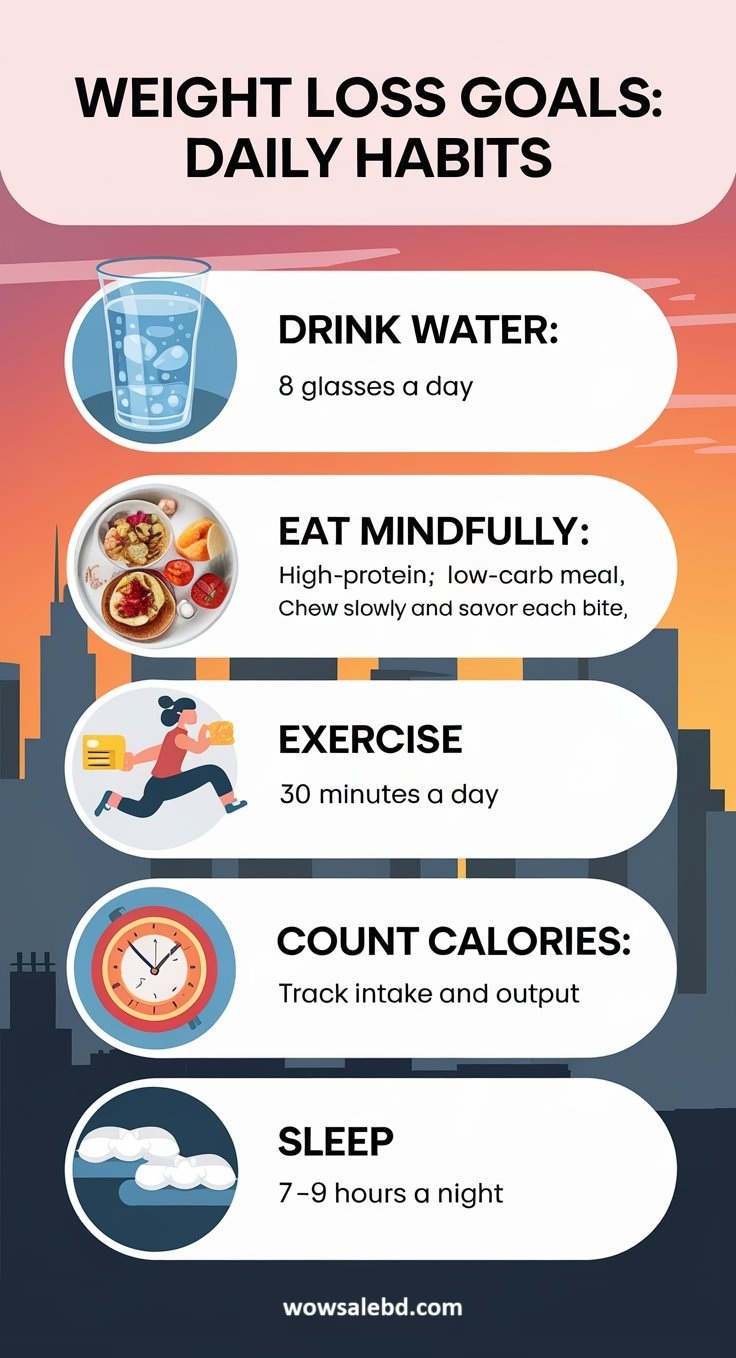

Daily Goals for Weight Loss
Starting a weight loss journey can feel like standing at the base of a towering mountain, with the peak hidden in the clouds and the climb ahead steep and uncertain. The gap between your current situation and your goals may seem overwhelming, making it easy to feel stuck or unmotivated.
Instead of fixating on the summit, what if you focused on the next step ahead?
The philosophy of this guide is all about breaking big goals into simple, achievable daily actions. By focusing your energy on what you can accomplish today, you reduce pressure and build a sense of momentum that is both empowering and sustainable. Unlike long-term weight loss targets, which can often feel abstract and unattainable, daily goals provide immediate wins and tangible progress that you can see and feel.
This guide isn’t about crash diets or extreme routines; it focuses on developing realistic habits that fit your lifestyle. You will learn how to implement small, consistent actions related to nutrition, physical activity, mindset, and rest. The outcome? A clear, personalized plan that is grounded in your reality and designed for lasting change.
The Importance of Focusing on Daily Actions
Transforming your weight loss journey begins with focusing on immediate goals instead of distant milestones. This simple shift in perspective not only eases your mental burden but also redefines how you approach personal growth.
Psychological Benefits
Focusing only on the final number on the scale can lead to feelings of defeat before you even start. Setting daily goals helps break the process down, allowing you to feel more in control and capable. Instead of chasing a distant dream, you can achieve something real and tangible right now, which instantly boosts your confidence and reduces anxiety.
Practical Benefits
Long-term goals can often feel vague, while daily actions provide you with clear tasks. Instead of saying, “I need to eat healthier,” you can commit to specific actions, such as “adding vegetables to lunch” or “swapping soda for water.” These small, manageable intentions are easier to plan, execute, and repeat.
Momentum Through Small Wins
Every small goal you achieve acts as a vote of confidence in your ability to change. These mini victories create emotional momentum, making it easier to stay motivated because you are constantly proving to yourself that you can follow through.
Habit Formation
Success is not built on one-time, dramatic efforts but rather on routine. When you repeat small, intentional actions daily, they begin to feel automatic. Over time, these micro habits accumulate, forming the foundation of a healthier lifestyle—one that feels less like a chore and more like a natural part of how you live.
Daily actions aren’t just tools for change—they’re the framework of transformation.
Daily Weight Loss Goals: Key Focus Areas and Practical Action Steps
Sustainable weight loss relies on consistent and intentional actions in four main areas: Nutrition, Activity, Mindset and Behavior, and Sleep. Each of these areas contributes uniquely to your transformation, and when they are combined, they create significant momentum. Below, you will find both what is important and how to take actionable steps today.
1. Nutrition: Fueling Your Progress
- A healthy body begins with mindful nourishment. Instead of fixating on calories, focus on achieving awareness and balance in your diet.
- Listen to your body’s fullness cues by slowing down during meals. Try dining without distractions like your phone or TV at least once a day.
- Stay hydrated by drinking at least eight glasses of water daily. Carry a refillable water bottle to remind you to drink more often.
- Enhance your meals by adding vegetables to your lunch and dinner, or by replacing one processed snack with a piece of fruit or yogurt.
- Increase your awareness of nutrition by reading the label on one packaged food item before consuming it.
- Finally, take just five minutes the night before to plan a balanced lunch for the next day.
2. Activity: Moving with Intention
- You don’t need a gym membership or a perfect schedule—just a commitment to staying active, no matter how it fits into your life.
- Get your heart rate up by going for a brisk 30-minute walk, or break it into three ten-minute sessions.
- Incorporate strength training by doing 10-minute bodyweight workouts at home, such as squats, push-ups, and lunges.
- Choose a more active lifestyle: take the stairs instead of the elevator, stretch while watching TV, or walk during phone calls.
- Track your movements—aim for 10,000 steps a day, or simply strive to improve on yesterday’s count.
3. Mindset & Behavior: Shaping Your Inner Dialogue
- Your mindset plays a crucial role in your progress. By aligning your thoughts with your goals, you can strengthen your consistency.
- To affirm your efforts, write down one thing you’re proud of at the end of each day.
- Take control of your triggers by identifying one emotional eating cue and replacing it with a healthier alternative, such as taking a walk or practicing deep breathing.
- Plan for success by preparing meals or packing snacks in advance, so you are not making impulsive decisions in the moment.
- When you feel overwhelmed, pause and take three slow, intentional breaths to help relieve stress.
- Celebrate small wins, like choosing to skip a sugary drink or sticking to your plan, no matter how minor they may seem.
4. Sleep: Resting Your Way to Results
- Rest is not a passive activity; it plays an active role in your body’s repair and fat-burning processes.
- To support hormonal balance and recovery, aim for 7 to 9 hours of sleep each night.
- Set a “wind-down” alarm 30 minutes before bed to help transition from productivity to relaxation.
- Establish a calming bedtime routine; activities like dimming the lights, enjoying herbal tea, or light reading can signal to your brain that it’s time to shut down.
- Avoid screens for one hour before sleep to enhance melatonin production.
- Finally, optimize your sleep environment by keeping your bedroom cool, quiet, and dark.
| Category | Goal Focus | Example Action Steps |
|---|---|---|
| Nutrition | Mindful Intake & Awareness | – Add vegetables to 2 meals – Swap soda for water – Read 1 food label |
| Activity | Consistent Movement | – Walk 30 mins – Take the stairs twice – 10-minute bodyweight circuit |
| Mindset & Behavior | Mental Resilience & Planning | – Write 1 positive affirmation – Practice deep breathing – Prep tomorrow’s meals |
| Sleep | Quality Rest & Recovery | – Avoid screens 1 hour before bed – Set a bedtime alarm – Follow a 3-step routine |
Every small action in these categories is a step closer to long-term change—and more importantly, to a healthier, stronger version of you.
Making Daily Goals Work for You
Creating daily goals isn’t just about checking off boxes; it’s about designing a rhythm that fits your life and supports your long-term success. Here’s how to make your goals work for you:
Personalization Is Key
Your life, your routine, your rules. The most effective goals are those that feel relevant and realistic. Whether you’re juggling a 9-to-5 job, raising a family, or simply navigating day by day, shape your goals around what genuinely fits your lifestyle. Prefer evening workouts? Great! Not a fan of meal prep? Find another way to stay nourished. Flexibility beats perfection.
Start Small, Build Gradually
Resist the temptation to overhaul everything at once. Start with one or two simple, achievable goals—such as drinking more water, taking a daily walk, or logging your meals. Once those become second nature, layer in new ones. This progressive approach prevents burnout and helps habits stick.
Normalize Setbacks
Off days happen, and they don’t undo your progress. Missing a goal isn’t failure; it’s feedback. Maybe you were tired, busy, or overwhelmed. Acknowledge it, learn from it, and then move forward. Sustainable success isn’t a straight line; it’s a flexible path with room for adjustments.
Self-Compassion and Fresh Starts
Treat yourself as you would a good friend on a tough day—be encouraging, not critical. Replace guilt with grace and remind yourself that every new day is an opportunity to recommit. When your inner voice supports your efforts, sticking to your goals becomes much easier.
Simple Progress Tracking
You don’t need color-coded charts or fancy journals. A checkmark on a calendar, a habit-tracking app, or a quick note about your progress is enough. Tracking builds awareness, boosts consistency, and helps you celebrate how far you’ve come, without the pressure of perfectionism.
The Most Important Takeaway
You’re building your system—one that isn’t based solely on willpower but is designed to support the person you are today while guiding you towards who you want to become.
Long-term weight loss is achieved through daily consistency
Lasting change arises not from grand gestures, but from the quiet, repeated efforts made every day.
Cumulative Power of Daily Effort
Like drops filling a bucket, every healthy choice—no matter how small—adds up over time. A single walk, a glass of water, or saying no to late-night snacking might not seem significant in the moment, but collectively, these choices lead to real and lasting transformation.
Beyond the Scale
Weight loss is about more than just numbers on a scale. As you remain consistent in your efforts, you will likely experience improvements such as clearer skin, an enhanced mood, steadier energy levels, better sleep, and a growing sense of confidence. These invisible victories significantly enhance your overall quality of life.
Celebrate Small Wins
Did you prepare your meals? Choose fruit over fries? Get to bed on time? Acknowledge these moments. Celebrating behavior change reinforces your commitment, building your identity as someone who shows up and follows through.
Focus on progress rather than perfection.
Progress isn’t always linear; you may plateau, fluctuate, or miss a day—and that’s perfectly fine. Instead of pursuing flawless outcomes, prioritize showing up with intention. The goal is sustainable growth, not perfection.
One day at a time—that’s how real change is made.
Daily Routine Schedule
| Time | Activity | Description |
|---|---|---|
| 7:00 AM | Wake Up | Start your day refreshed and ready |
| 7:00–7:30 AM | Morning Stretch & Exercise | Light stretches and exercises to energize your body |
| 7:30–7:45 AM | Breakfast | Eat a nutritious, balanced meal |
| 8:30 AM | Work/Study | Focus on high-priority tasks |
| 10:30 AM | Break | Take 15 minutes to rest and recharge |
| 10:45–12:30 PM | Continue Work/Study | Stay productive before lunch |
| 12:30 PM | Lunch | Enjoy a balanced meal and relax |
| 1:30 PM | Afternoon Work/Study | Resume work with focus |
| 3:30 PM | Short Break | Step away briefly to refresh your mind |
| 3:45–5:00 PM | Wrap Up Work/Study | Finish remaining tasks |
| 5:00–6:30 PM | Evening Relaxation | Unwind with a hobby, reading, or quiet activity |
| 6:30 PM | Dinner | Enjoy a healthy, satisfying dinner |
| 8:00 PM | Wind Down | Begin transitioning toward sleep with calming activities |
| 9:30 PM | Bedtime Routine | Prep for rest with a consistent, peaceful ritual |
| 10:00 PM | Sleep | Aim for 7–9 hours of quality sleep |
Feel free to adjust this routine based on your personal preferences!
Frequently Asked Questions (FAQ)
Here’s a quick, helpful roundup of common questions and concerns many people have when building daily habits for weight loss:
- When will I see results?
Most people begin to notice subtle changes—like increased energy or improved mood—within 2 to 4 weeks. Visible changes typically follow with consistent effort over time. - What if I miss a day?
If you miss a day, it’s not an issue! A single off-day won’t erase your progress. Take a moment to reflect, refocus, and resume from where you stopped. - Are cheat days okay?
Cheat days can be beneficial. Occasional indulgences contribute to balanced living, as the focus should be on consistency rather than rigid perfection. - How do I stay motivated?
To stay motivated, keep your goals visible and track small wins. Remind yourself why you started. Progress photos and daily habit streaks can also help. - How should I measure progress?
Use a combination of methods: body measurements, energy levels, mood, sleep quality, and how your clothes fit—don’t rely solely on the scale. - How much water should I drink?
It is generally recommended to drink about 8 cups (2 liters) of water each day. However, individual hydration needs can vary based on factors such as activity level, body size, and environment. - What are mindful eating practices?
Mindful eating practices involve eating without distractions, chewing slowly, recognizing hunger and fullness cues, and appreciating the flavors of food. - How can I improve sleep quality?
To improve sleep quality, go to bed and wake up at the same times each day, avoid screens for an hour before bedtime, keep your bedroom cool and dark, and establish a calming pre-sleep routine.
Conclusion: Your Daily Path to Weight Loss Success
The key to lasting transformation lies not in making giant leaps but in taking small, consistent steps each day. By concentrating on manageable daily goals in areas like nutrition, activity, mindset, and rest, you can build a strong foundation that supports sustainable change without feeling overwhelmed.
Start by selecting one or two achievable goals today. As these actions become habits, you will gain the confidence to take on more.
Remember, this journey is yours. Every glass of water, every walk, every mindful meal is proof that you have the power to change, one intentional choice at a time. The path to a healthier, stronger you begins—not someday—but today.