

How to Start Your Weight Loss Journey at Home
Beginning a weight loss journey involves much more than simply losing weight; it’s a personal and empowering experience that affects every part of your life. It requires changing your habits, nourishing your body, enhancing your mindset, and creating routines that support health from the inside out.
You don’t need a gym membership, expensive equipment, or a complicated plan to begin. Some of the most effective changes can happen right in your own home, utilizing your space, schedule, and daily choices.
Your home can become your launchpad for transformation. With some structure, determination, and self-compassion, you can create meaningful changes one step at a time. Whether it’s doing your first push-up, writing your first food journal entry, or experiencing your first moment of mindful eating, every effort counts. The journey begins with a single choice: to start now, just as you are.
Why Weight Loss at Home is Effective
Beginning your weight loss journey at home is not only convenient but also a strategic and sustainable choice. By utilizing your personal space as the foundation for change, you can minimize common obstacles and develop healthier habits that easily integrate into your daily life.
Convenience: Your Routine, Your Way
One of the greatest benefits of working from home is the flexibility it provides. You have the opportunity to fit in a workout between tasks, prepare a healthy meal whenever it suits your schedule, and adjust your routine as needed without worrying about travel, gym hours, or adhering to someone else’s timetable. This flexibility makes it easier to maintain consistency over time.
Privacy & Comfort: No Pressure, No Comparisons
Exercising or adjusting your diet at home provides a private, stress-free environment where you can focus entirely on your progress. You don’t have to worry about feeling self-conscious or comparing yourself to others. Whether you’re following an online workout video or learning how to portion your meals, you can do everything at your own pace in a space that feels safe and comfortable.
Cost-Effective: Fitness Without the Financial Strain
Working out at home eliminates the pressure of spending money on costly gym memberships, personal trainers, or specialty foods. With just a few basic pieces of equipment—such as resistance bands, a yoga mat, or even a chair—you can develop effective exercise routines. Additionally, budget-friendly meal plans focused on simple ingredients make healthy eating more accessible.
Full Control Over Your Environment
Your home gives you unparalleled control over your surroundings, from the foods you keep in your kitchen to how you set up your workout space. You can choose the music, the atmosphere, the pace of your activities, and the meals you prepare. This level of autonomy enhances your sense of ownership and consistency, both of which are essential for lasting change.
You don’t need to strive for perfection; what you need is consistency. Your home is not a limitation; it’s an opportunity. By utilizing what you already have, adjusting at your own pace, and taking small, intentional steps each day, you’re building a sustainable foundation for genuine transformation. The best part? You never have to leave the house to begin.
Set Realistic, Achievable Goals
Establishing the right kind of goals is crucial at the beginning of your weight loss journey. Effective goals provide direction, focus, and motivation. However, for them to be successful, they must be realistic and clearly defined.
Action Goals vs. Outcome Goals
There are two types of goals you should consider combining:
- Action Goals focus on the steps you take to achieve your desired results.
– Examples: “Walk for 30 minutes each day” or “Drink 8 glasses of water daily.”
– These goals are entirely within your control and help build healthy habits. - Outcome Goals: Outcome Goals reflect the results you want to achieve.
– Examples: “Lose 5 kg in 2 months” or “Fit into an old pair of jeans.”
– While these goals provide direction, they depend on your ability to follow through with the necessary actions.
Action goals represent the journey, while outcome goals signify the destination. Both are essential for staying on track and measuring progress.
Start Small and Build Up
Avoid trying to change everything all at once. Instead, focus on one or two simple habits that you can realistically maintain, such as stretching for five minutes in the morning or replacing one sugary drink with water. These small steps, when practiced consistently, can lead to significant changes over time.
Celebrate Non-Scale Victories
Weight loss is not solely about the number on the scale. Pay attention to other signs of success, such as:
– Increased energy throughout the day
– Improved sleep quality at night
– Enhanced mood and focus
– Clothes fitting more comfortably
– Feeling stronger during workouts
Recognizing and celebrating these achievements can help maintain your motivation, even if the progress is slow to show.
| Goal Type | Example | Why It Helps |
|---|---|---|
| Action Goal | Walk 30 minutes after lunch daily | Builds consistency and burns calories without extra planning |
| Outcome Goal | Lose 4 kg in 2 months | Gives long-term direction and motivation |
| Non-Scale Victory | Sleep 7+ hours or feel more energized | Reinforces progress beyond just weight |
| Long-Term Goal | Maintain healthy habits year-round | Encourages sustainability, not quick fixes |
The key is progress, not perfection. Start small, be kind to yourself, and make adjustments as needed—you’re building something lasting, not rushing a race.
Create a Diet Plan that is Friendly for Home Environments
Establishing a simple, healthy diet at home is one of the most effective steps you can take on your weight loss journey. The secret lies not in complex recipes or special ingredients, but in developing habits that are easy to maintain and fit well into your daily routine.
Focus on Whole, Natural Foods
Opt for foods that are as close to their natural state as possible. These foods are rich in nutrients and help you feel full without the added sugar, salt, or preservatives. Consider including:
– Fresh fruits and vegetables
– Lean proteins such as chicken, fish, eggs, and tofu
– Whole grains like brown rice, oats, and whole wheat bread
– Healthy fats from sources like nuts, seeds, and avocados
Meal Prep Planning
Taking some time to plan your meals can help prevent overeating and save time on busy days. Here are some tips to make meal prep easier and more effective:
– Use portioned containers to eliminate guesswork regarding serving sizes.
– Prepare ingredients in batches, such as chopped vegetables or cooked rice.
– Keep healthy snacks readily available, like cut fruit, boiled eggs, or hummus with carrots.
– Consider using a food scale as a helpful tool when you start focusing on portion control.
Stay Hydrated for Better Control
Drinking water is essential for everything from digestion to appetite control. Many times, we mistake thirst for hunger.
– Aim to drink 8 to 10 glasses of water each day.
– Consider having a glass of water before each meal to help prevent overeating.
– To make your water more enjoyable, add lemon, cucumber, or mint for a refreshing twist.
🗓 One-Day Sample Meal Plan
| Meal | Food Options | Why It Works |
|---|---|---|
| Breakfast | Oatmeal with berries and chia seeds | High fiber keeps you full and supports digestion |
| Snack | Apple slices with peanut butter | Healthy fats and natural sugars for steady energy |
| Lunch | Grilled chicken, brown rice, and sautéed vegetables | Balanced with protein, complex carbs, and fiber |
| Snack | Greek yogurt with a drizzle of honey and flaxseeds | Good for gut health and protein-rich |
| Dinner | Baked fish, sweet potato, and steamed broccoli | Rich in omega-3s, vitamins, and minerals |
📚 Harvard’s Healthy Eating Plate offers a visual guide to building balanced meals.
How to Create an Effective At-Home Workout Routine
Creating an effective at-home workout routine is all about simplicity, structure, and consistency. You don’t need fancy equipment or a dedicated gym space—just a plan that fits your goals, your lifestyle, and the space you’ve got. Here’s how to make it work:
1. Define Your Goal
Start by identifying your focus:
- Fat loss: Prioritize cardio and full-body circuits.
- Muscle gain: Emphasize strength training and progressive overload.
- General fitness: Mix cardio, strength, and mobility work evenly.
2. Choose the Right Exercises
Use bodyweight exercises as your foundation:
- Lower body: Squats, lunges, glute bridges
- Upper body: Push-ups, dips (using chairs), arm circles
- Core: Planks, leg raises, bicycle crunches
- Cardio: Jumping jacks, high knees, burpees
Add low-cost tools like:
- Resistance bands
- Dumbbells or household weights (e.g., water bottles)
- A yoga mat or towel for comfort
3. Structure Your Weekly Plan
Here’s a balanced example:
| Day | Focus | Activity Type |
|---|---|---|
| Monday | Full-Body Strength | Squats, push-ups, planks |
| Tuesday | Cardio + Core | Jump rope, mountain climbers, crunches |
| Wednesday | Active Recovery | Yoga or stretching |
| Thursday | Lower Body Strength | Lunges, glute bridges, calf raises |
| Friday | HIIT Circuit | Burpees, jumping jacks, squat pulses |
| Saturday | Upper Body & Core | Triceps dips, arm circles, leg raises |
| Sunday | Rest | Light walking or meditation |
This structure keeps your routine engaging, effective, and doable, right from your living room.
4. Plan Your Workout Format
Aim for 20–40 minutes per session, depending on your schedule.
- Warm-Up (5–7 min): March in place, arm swings, dynamic stretches
- Main Workout (20–30 min): 2–4 circuits of 4–6 exercises
- Cool Down (5 min): Light stretches, deep breathing
5. Progress Over Time
Keep challenging your body by:
- Increasing reps or sets weekly
- Slowing down movements (for more time under tension)
- Reducing rest time
- Trying advanced variations (e.g., jump squats, decline push-ups)
6. Track & Stay Consistent
- Use a workout log or fitness app
- Set weekly goals (e.g., 4 workouts per week)
- Celebrate milestones (like mastering a full set of push-ups)
Stay Motivated and Committed: Overcome Challenges and Celebrate Progress
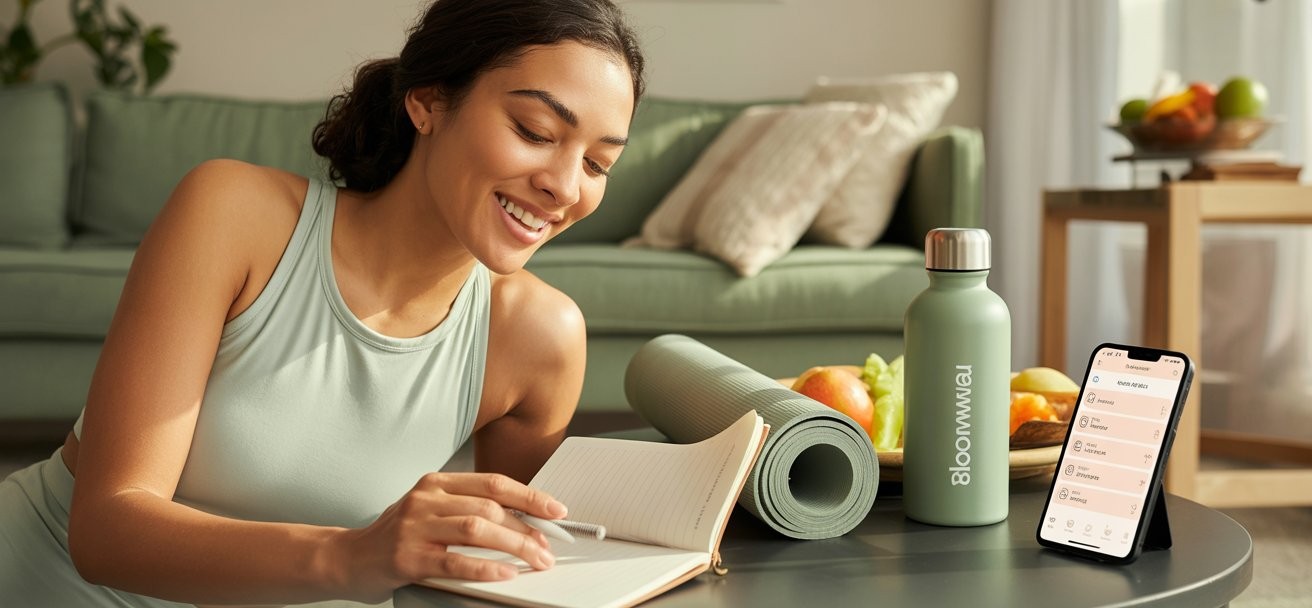
Motivation is what gets you started, while commitment is what keeps you going. Together, they serve as the fuel and foundation for any successful weight loss journey, especially when you’re doing it from home. Remember, the goal isn’t to be perfect every day; it’s about consistently showing up, making adjustments as needed, and recognizing how far you’ve come.
Reconnect with Your “Why”
Your “why” serves as your internal compass. Whether it’s about feeling stronger, boosting your energy, or simply proving to yourself that you can stick with your goals, write it down and revisit it often. This reminder will help guide you on days when your willpower feels low.
Track Progress Beyond the Scale
Don’t let a number define your success. Instead, monitor the following:
– Body measurements
– Energy levels and mood
– Increases in endurance and strength
– Progress photos (taken every 2 to 4 weeks)
You’ll notice transformations in how you move, feel, and carry yourself long before the scale reflects them.
Use Systems That Keep You Grounded
– Keep a journal or use a fitness app to log your workouts, meals, and water intake.
– Utilize habit trackers to visualize your consistency.
– Reflect on your progress weekly by asking yourself: What worked? What needs adjustment?
These tools will help you stay accountable and make informed decisions instead of relying solely on motivation.
Celebrate Small Wins Along the Way
Set mini milestones and reward yourself for achieving them—no food rewards needed. Consider treating yourself to:
– A new workout top after two weeks of consistency
– A relaxing evening in after reaching your step goal
– Sharing your success with a friend or community group
These reinforcements help turn discipline into celebration.
Don’t Start This Journey by Yourself
Having support—whether it’s a workout partner, an online community, or a coach—makes the process more enjoyable and manageable. Accountability helps maintain momentum, even on your toughest days.
Success isn’t about avoiding struggle; it’s about learning to persevere despite challenges. While motivation can be helpful, it is commitment that truly drives you forward. Each time you choose to keep moving, you prove to yourself that you are capable of overcoming difficult situations.
Frequently Asked Questions (FAQ)
Starting a weight loss journey at home can bring up lots of questions. Here are some honest, encouraging answers to help you move forward with confidence:
Q: How long until I see results?
You may notice increased energy and a better mood within a couple of weeks. Visible changes—like weight loss or improved muscle tone—often show up within 4–6 weeks with consistent effort.
Q: What if I don’t have equipment?
No problem! Bodyweight exercises like squats, lunges, push-ups, planks, and walking are incredibly effective. You can also use everyday items like water bottles or backpacks for resistance.
Q: Can I lose weight just by walking?
Yes! Walking is a powerful and underrated way to burn calories, boost your mood, and improve overall health. Combine it with mindful eating and you’ll see steady progress.
Q: Is it okay to have cheat meals?
Absolutely. An occasional treat won’t ruin your progress. Allowing flexibility can reduce cravings and help you stick to your routine long term. Just aim for balance, not restriction.
Q: Can I lose 20 pounds in a month?
While it’s possible in extreme cases, it’s usually not safe or sustainable. A healthy and realistic goal is 1–2 pounds per week. Focus on building habits that you can maintain, not just chasing fast results.
Conclusion
Change is not about making massive transformations in one leap; it’s about taking that first small, intentional step and believing in its importance. Whether you prepare one healthy meal, move your body for a few minutes, or drink more water today, that initial action matters.
There will never be a “perfect time” to begin. What you have right now—your body, your space, your current energy—is more than enough to start. Progress is built on consistency, not perfection. Choose one achievable goal today and commit to it. That simple act creates momentum.
Every healthy choice you make is a victory. Stack those victories patiently and remember: you’re not starting over; you’re constructing something greater. One repetition, one meal, and one mindset shift at a time. You are more capable than you realize.