
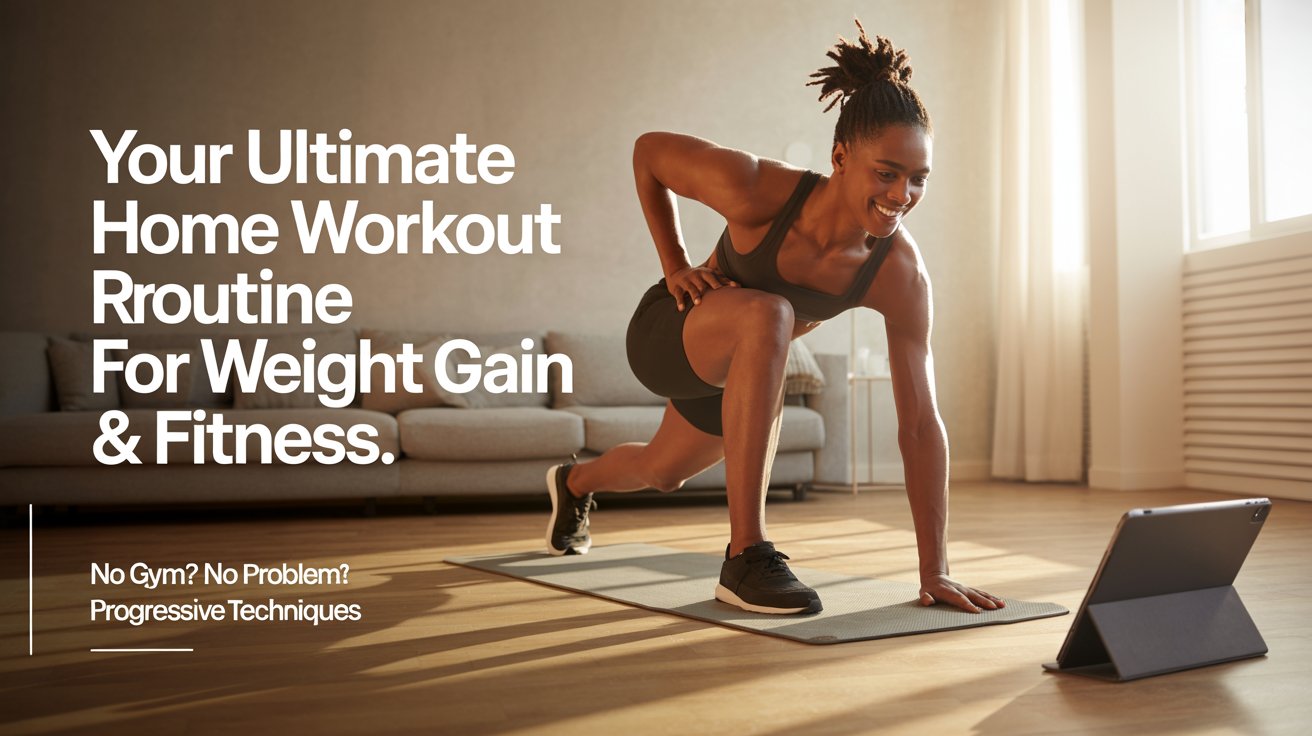
Home Workout Routine for Weight Gain
Don’t believe that building muscle requires an expensive gym membership or heavy equipment. The idea that you can’t gain mass at home is outdated, and we’re here to prove it wrong.
Gaining weight in a healthy and structured manner depends on three essential pillars:
- consuming more calories than you burn (calorie surplus),
- consistently challenging your muscles (progressive overload),
- regularly attending your workouts (consistency).
When these strategies come together, your body receives the signal to grow stronger and increase in size.
This guide serves as your blueprint for building muscle at home, combining expert insights, practical tips, and an effective, straightforward approach. Let’s dive in and unlock your body’s potential, one rep at a time.
Understanding Weight Gain and Muscle Growth
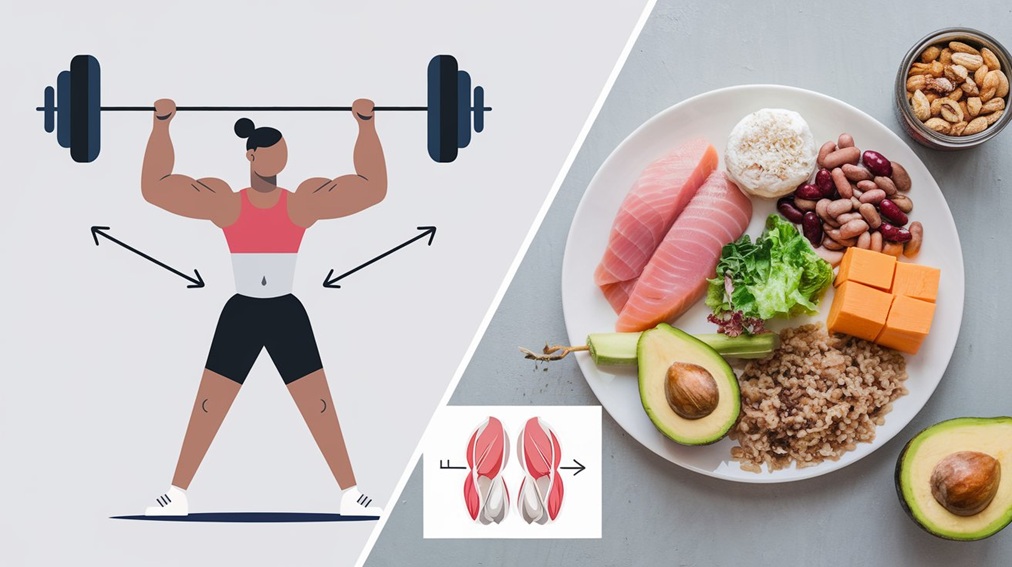
Consider your body as a financial system: to gain weight, you must deposit more calories than you withdraw through energy expenditure. This surplus of calories serves as the essential fuel your body uses to build new tissue, particularly muscle, instead of merely storing it as fat.
Muscle hypertrophy is the biological process responsible for muscle growth. When you participate in resistance training—such as push-ups, squats, or rows—your muscles undergo tiny micro-tears. While this may sound concerning, it triggers your body to begin repairing the muscles and rebuild them with stronger fibers. The outcome? Gradual and measurable muscle gain.
To build muscle effectively, nutrition is essential. Protein serves as the primary building block, helping with muscle repair and growth. Carbohydrates provide the energy necessary for intense workouts at home and help replenish muscle glycogen afterward. Additionally, healthy fats play an important role by regulating hormones such as testosterone, which are critical for muscle development.
When combined, effective training and intelligent nutrition transform your home into a powerhouse for building muscle.
Essential Principles for Effective Home Workouts
Building muscle at home is not about fancy equipment; it’s about mastering the fundamentals. These core principles establish a solid foundation for lasting results.
Progressive Overload
Your muscles adapt to challenges, and progressive overload involves gradually increasing those challenges over time. If you don’t have dumbbells, don’t worry! You can use resistance bands, increase the number of repetitions or sets, shorten your rest periods, or fill a backpack with books for added weight. The important thing is to continually push your muscles slightly beyond their comfort zone.
Proper Form
Speed and volume are insignificant if your technique is poor. Using the incorrect form can lead to injuries and decreased effectiveness. Focus on quality rather than quantity: performing slow, controlled movements with a full range of motion ensures that the correct muscles are engaged.
Consistency is Key
Muscle growth is not a result of infrequent efforts; it flourishes with routine. Whether you choose to work out three or four times a week, maintaining a consistent workout schedule helps your body adapt and grow. While progress may not always be steady, consistency ensures that you continue moving forward.
Mind-Muscle Connection
This concept is crucial—focusing your attention on the muscle you’re working helps recruit more muscle fibers. Visualize the muscle contracting and engage intentionally. It’s a simple adjustment that yields significant results over time.
Rest and Recovery
When you work out, your muscles undergo stress and break down; resting allows them to rebuild and grow stronger. It’s important to wait at least 24–48 hours before training the same muscle group again. To enhance recovery, aim for 7–9 hours of sleep each night. This combination creates an effective recovery formula.
Mastering these principles empowers you to transform any living room, bedroom, or balcony into your dedicated strength-building arena.
Full Body Workout Routines
These full-body routines effectively target all major muscle groups using only your bodyweight and a few common household items. They are practical, efficient, and designed to scale with your progress.
Workout A
Lower Body Exercises
- Squats: Excellent for targeting the quadriceps, glutes, and hamstrings. To increase the intensity, consider adding a weighted backpack.
- Lunges (alternating legs): Incorporating alternating leg lunges into your workout routine is a powerful way to develop unilateral strength and enhance your balance. Don’t miss out on the benefits of this effective exercise!
- Calf Raises: A simple yet effective exercise for developing the lower legs. For a greater range of motion, try performing them on a step.
Upper Body Exercises (Push )
- Push-ups: A classic exercise for building chest, shoulder, and tricep strength. Adjust the incline or decline to modify difficulty.
- Pike These emphasize shoulder strength and overhead pressing patterns.
Upper Body Exercises (Pull)
- Resistance Band Rows: Perform pulling motions to target the back and biceps. Ensure the band is anchored securely for safety.
Core
- Plank: Builds core endurance and stability. Add leg lifts or shoulder taps for variation.
- Crunches: Target the upper abs with control—avoid pulling on your neck.
Workout B
Lower Body
- Glute Bridges: Focus on activating and strengthening your glutes and posterior chain. For an added challenge, try the single-leg variation.
- Walking Lunges: This exercise combines balance, strength, and core stability. If possible, hold weights to increase the intensity.
- Squat Jumps: Incorporate explosiveness and a cardio element while building power with this dynamic movement.
Upper Body Exercises (Push )
- Dips: Use two chairs or a sturdy surface to engage the triceps and lower chest. Incline push-ups: Easier on the shoulders—great for progressing toward standard or decline variations.
- Incline Push-ups: These are easier on the shoulders and are excellent for progressing toward standard or decline push-up variations.
Upper Body Exercises (Pull)
- Inverted Rows: Inverted rows are an excellent bodyweight alternative to pull-ups. You can vary the grip and angle to adjust the difficulty.
Core
- Leg Raises: Strengthen lower abs and hip flexors. Keep movements controlled to avoid using momentum.
- Russian Twists: Target obliques and enhance rotational strength. Add weight for extra resistance.
Each session presents a full-body challenge that enhances strength, coordination, and symmetry. Rotate the routines weekly, and remember to breathe mindfully with each repetition!
| Workout | Muscle Group | Exercise | Description |
|---|---|---|---|
| A | Lower Body | Squats | Great for quads, glutes, and hamstrings. Add a weighted backpack for intensity. |
| Lunges (alt. legs) | Builds unilateral strength and balance. | ||
| Calf Raises | Targets the lower legs. Try on a step for greater range. | ||
| Push (Upper Body) | Push-ups | Chest, shoulders, triceps. Modify incline/decline to scale. | |
| Pike Push-ups | Focus on shoulder strength and overhead pressing patterns. | ||
| Pull (Upper Body) | Resistance Band Rows | Simulates pulling for the back and biceps. Anchor band securely. | |
| Core | Plank | Builds core endurance and stability. Try leg lifts or shoulder taps. | |
| Crunches | Target upper abs. Avoid pulling on the neck. | ||
| B | Lower Body | Glute Bridges | Activates glutes and posterior chain. Try single-leg for added challenge. |
| Walking Lunges | Combining balance, strength, and core stability. Add weights if possible. | ||
| Squat Jumps | Builds power and cardio demand. Focus on explosive movement. | ||
| Push (Upper Body) | Dips | Use chairs or a sturdy surface. Targets triceps and lower chest. | |
| Incline Push-ups | Easier on the shoulders. Prepares for standard/decline versions. | ||
| Pull (Upper Body) | Inverted Rows | Bodyweight pull-up alternative. Vary grip and angle for difficulty. | |
| Core | Leg Raises | Strengthens lower abs and hip flexors. Control the motion. | |
| Russian Twists | Builds oblique strength. Add weight to increase intensity. |
Warm-Up & Cool-Down
Warming up and cooling down may seem optional, but they are essential parts of your workout. Warming up prepares your body for movement, while cooling down aids in recovery afterward.
Warm-Up: Light Cardio and Dynamic Stretching
Begin with 5 to 10 minutes of gentle, heart-pumping activity to elevate your body temperature and prepare your muscles for action. Consider activities like:
- Jumping jacks
- High knees
- Arm circles
- Leg swings
- Torso twists
Follow with dynamic stretches to improve range of motion and prime your joints for the exercises ahead.
Cool Down: Static Stretches for Recovery and Flexibility
After your workout, take 5–10 minutes for slow, deep stretches. Hold each stretch for 20–30 seconds while breathing steadily. Focus on:
- Hamstrings and quads
- Calves
- Hips and lower back
- Chest and shoulders
- Triceps and upper back
This cool-down phase reduces muscle tightness, enhances flexibility, and prepares you for recovery, ensuring you’re ready to tackle your next workout.
Workout Structure & Weekly Plan
Building muscle doesn’t require a daily grind—it requires smart scheduling. By structuring your week with balance in mind, you allow your body time to recover while keeping training consistent enough to fuel growth.
Training Frequency:
Aim for 3 to 4 workout days each week, depending on your recovery capacity and schedule. More isn’t always better—what matters is the quality of your workouts and your ability to recover in between them.
Recommended Training Approach:
You can choose a full-body routine for every session or divide your focus between different muscle groups. For simplicity and efficiency, a full-body approach works exceptionally well for home training.
Weekly Workout Summary Table
Here’s a clear weekly breakdown to help you organize your routine, promote progress, and facilitate recovery. Feel free to customize it based on your schedule, recovery speed, or preferences.
| Day | Workout Focus | Key Activities | Progression Tips |
|---|---|---|---|
| Monday | Full Body Workout A | Squats, Push-ups, Resistance Band Rows, Plank | Add reps or resistance (e.g., backpack, bands) |
| Tuesday | Rest / Light Activity | Stretching, walking, and light yoga | Focus on mobility and hydration |
| Wednesday | Full Body Workout B | Glute Bridges, Dips, Inverted Rows, Russian Twists | Try a slower tempo or harder variations |
| Thursday | Rest | Passive recovery or optional gentle mobility work | Get quality sleep, foam roll tight areas |
| Friday | Full Body Workout A (Repeat) | Repeat Monday’s routine | Increase sets or reduce rest intervals |
| Saturday | Rest / Active Recovery | Light jog, mobility flow, stretching | An optional body scan or mindfulness recovery |
| Sunday | Full Body Workout B (Repeat) | Repeat Wednesday’s routine | Challenge tempo or add supersets for intensity |
This schedule structures your week without overwhelming you, making it ideal for balancing intensity with proper recovery.
Strategies for Progression
Your body quickly adapts to challenges, making progression essential. The good news is that you can enhance your home workouts creatively without needing an elaborate gym setup.
Level Up Your Workouts with Advanced Moves
Once you’re comfortable with basic exercises, it’s essential to make them more challenging to keep improving. Doing the same push-ups or squats daily can become dull and may halt muscle growth.
Instead, try these advanced variations:
– Change regular squats to jump squats or pistol squats.
– Switch standard push-ups to decline, diamond, or archer push-ups.
These modifications enhance your strength, balance, and coordination while keeping your workouts fresh and effective.
Try Changing Your Speed and Rest Time
If you want to make your exercises more challenging without adding weights, try adjusting your speed and rest time.
- Slow It Down: Lower yourself slowly during exercises like push-ups or squats. This keeps your muscles engaged for a longer period, helping them become stronger.
- Take Shorter Breaks: Reduce the amount of rest time between sets. This makes your workout feel more intense and improves your endurance.
These simple adjustments can transform your regular workouts into greater challenges—no equipment needed!
Progression is not a race; it is a steady climb. Focus on small, consistent improvements, and your gains will follow. Let me know if you would like a printable tracker or spreadsheet to monitor your progress!
Nutrition for Muscle Gain
To effectively build muscle, it’s essential to focus on proper nutrition. This involves consuming an adequate amount of calories, proteins, carbohydrates, and healthy fats to support your training and recovery. Prioritizing protein intake is crucial, aiming for at least 1.6 to 2.2 grams of protein per kilogram of body weight each day. Incorporating a variety of nutrient-dense foods, such as lean meats, dairy, legumes, whole grains, fruits, and vegetables, will provide the necessary vitamins and minerals for optimal muscle growth. Additionally, staying hydrated and timing your meals around workouts can further enhance muscle development and recovery.
Muscle Growth Nutrition Table
| Nutrition Focus | What It Does | Simple Tips & Food Examples |
|---|---|---|
| Calorie Surplus | Fuels muscle growth by giving your body extra energy | Eat slightly more than you burn; track meals if needed |
| Protein Intake | Repairs and builds muscle | Aim for 1.6–2.2g per kg body weight; eat chicken, eggs, lentils, Greek yogurt, tofu, protein powder |
| Carbohydrates | Refill muscle energy stores (glycogen) | Choose oats, brown rice, sweet potatoes, fruits, and whole wheat pasta |
| Healthy Fats | Supports hormones (like testosterone) and adds calories | Include nuts, avocado, olive oil, salmon, and seeds |
| Hydration | Boosts strength, recovery, and nutrient use | Drink water throughout the day, especially before and after workouts |
| Meal Timing | Helps muscle recovery and steady growth | Eat protein within 1–2 hours after training; spread protein across all meals |
Frequently Asked Questions (FAQ)
Can I gain weight with home workouts?
Absolutely! With the right balance of resistance training and a calorie-surplus diet, home workouts can effectively help you build lean muscle and increase weight, no gym required.
What is the best workout routine for weight gain?
There’s no one-size-fits-all, but a well-structured plan that includes compound movements (like push-ups, squats, and rows), progressive overload, rest, and consistent nutrition is highly effective.
How to gain 5 kg in 1 month?
Gaining 5 kg of lean mass in a month is extremely ambitious and, for most, unrealistic. A more sustainable goal is 0.5–1 kg per week with a combination of strength training and a moderate calorie surplus.
What is the 3-3-3 rule gym?
The “3-3-3 rule” isn’t a standardized fitness term. It may refer to three sets, three exercises, or a specific sequence used by a trainer. If you encountered this rule somewhere, it’s best to look for the specific context it was used in.
How can I bulk in 7 days?
True bulking—meaning actual muscle gain—takes time. While you might see weight changes in a week, that’s often due to water, food intake, or glycogen, not solid muscle. Stick with a longer-term plan for meaningful gains.
How can a skinny person gain weight?
Consistently eating in a calorie surplus, focusing on strength training (especially compound lifts), prioritizing protein intake, and getting enough sleep and recovery. It’s about building habits, not just meals.
Conclusion
You don’t need a high-end gym or a room full of equipment to build muscle and gain healthy weight. With consistency, creativity, and commitment, your home can become the training ground for your transformation.
Remember the essentials: train smart, fuel your body well, and progress at your own pace. Whether you’re doing push-ups in your living room or blending a protein smoothie in your kitchen, every step counts. Your strength isn’t built overnight—but it is built one rep, one bite, and one day at a time.
Start where you are. Trust the process. And celebrate every gain—inside and out. You’ve got this.